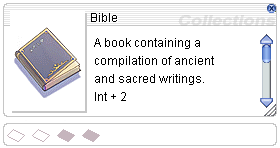
Introducing the Bible as an artefact

Welcome to a short overview of one of the biggest magic portals in the world – a book of Bible. The current user base is approximately around 30% of the global population. One may also note that the Bible as a literary work is an iteration of the Judaism stories thus making the Bible partly a recycled magic circle.

So, how is a Bible a magic circle?
Bible is a collection of narratives which makes the book itself into a magic circle, like any other story. But it’s MDA is too separated between different planes of existence that the perception of the real value of the text becomes too diffused or distorted. The problem lies in the fact that one might suggest that a book of Bible actually consists of 2 separate magic circles: one magic circle dealing with the Mechanical part (the Ritual) and another magic circle dealing with the Dynamics and the Aesthetics (the Story).
To understand what is the Church one must understand what a Ritual is. A Ritual is a routinely performed action by a human where they connect some personal meaning to the performed actions thus giving them more purpose from the individual perspective. It is how a user can incorporate the stories of the Bible into their daily life. The Ritual is the more familiar magic circle to our physical plane of existence. It manifests itself in the form of the Church and the weekly visit to the temples (check-in, submission).
The Church is the one who has the most control over influencing its user’s behaviour and can basically be viewed as a giant corporation whose sole interest is to attract more users to their game (acquisition). But like so many other entities that reach the level of a corporation, the Church is losing sight of what allowed it to become what it is. In today’s realias we witness the Church slowly killing their own product by their own actions.
The Church takes upon itself a role of an interpreter of how the Ritual is to be performed and the actions to be understood. The problem is that people are bad at drawing a line between the Ritual and the Story. By spreading their influence over the Ritual, the church basically can interfere with the user’s experience (the Story) of the Bible reader on all possible levels (Protestantism is a reaction to limit the Churches influence into the interpretation of the Story). And while the initial version of the Bible magic circle under the Church’s administration might have been very successful in its initial stages, in today’s rapid society the Bible becomes an artefact of the past exactly because of the archaic structure of its magic circles.
The submission (busy work) approach to the Ritual as a type of Fun scares away new converts from Christianity as an active practice. This, combined with some other questionable practised by the Church back in the days (examples: crusades (murder), catholic indulges (transactions), Spanish Inquisitions, etc.) creates more and more agnostics in the Christianity dominated regions of the planet. One must mention that the church has been facilitating its user base through many different practises, like increasing the quality of life of its user’s for example and it retains a strong presence in the poorer places of the planet (which would be logical as such would have been its function in its original form). But Europe, as the heart of Christianity, is losing its interest fast (retention). And the reason for that could be the punishing levels of submission that seem like an unproportionate investment of time against a possible payout. People simply vote with their time. They choose to perform other things besides participating in the Ritual. And this has a consequence in the real world.
European society has been fostered by the Church for a long period of time. And the Church has contributed in various ways to the well-being of its customers (LTV). The Church remains one of the bigger charity engines in the world. One of the things the Church did try to teach people was the understanding of co-operation. This meant that by losing younger generations the Church essentially caused an emotional ice age in Europe with the last century being filled with a sense of anxiety and depression in the young people.
How can one claim that? Because it is easy to oversee the fact that a good game creates a good community. Now imagine a tradition of millennia being interrupted? One might suggest that today’s agnostics in Europe are simply people who got severed from the major cultural stream. And this might explain a strange sense of homelessness that a lot of youth feel in these last years. It might be the slow crippling realisation of the fact that we appear to be missing a crucial part of our life – the community. The sense of community that used to be fostered by the Church for the last dozen centuries.
Now, to the more interesting speculative part: the OTHER side of the Bible (secret). The side that has brought Christianity its influence, stature and popularity in the Mediterranean and helped the Faith to foster the community (dynamic). If one is to look past the noise of the façade created by the Church, the book contains a much more intricate magic circle on the inside (alternate reality). And this information is obstructed by the language and the interpretation. So, a new user would only be able to perceive the Ritual part of the Bible but not the Story. And it is, in fact, the Story that helps to understand the Ritualistic submissive side of the Bible. But with the Story being too out of focus because of the latest Church trends (and by late we mean, the past several centuries), the submission seems like a waste of time.
Time is the central reason why today most of the Abrahamic religions are starting to slowly lose their ground. These games are designed for a different time. And different time perception. The Bible is a game designed by the ancient writers to allow the exploration of time as well as space. People are generally curious about their surroundings. But, we are talking about a world where information is travelling at the pace of a turtle. We are talking about a world where you might never leave your home village or town and be surrounded by the same people your entire life. We are talking about a world where you do the same tasks (a.k.a the daily grind) for your community every day of your life. But the religion allows for a temporary escape from that (fantasy). And a story about a distant city (open world) for an ancient kid is probably like a story about a different planet for a modern kid. Almost beyond our imagination. And it allows conveying stories from different periods of time (playing with time). This is our oral history. This way information travels at what now seems like an excruciatingly slow pace. And one has to fill up a lot of time between people coming and going (arrivals and departures) who are carrying the information from other places in the world (location-based, spatial expansion).
However, the Bible teaches not only to understand the physical world beyond the borders of the mundane but also teaches to understand other people. This is something that comes together with any creative work (creative work). And since Bible is basically a catalogue of stories, its artistic value is immense. Artistic expression is something that can exist only in the head of the readers without affecting the world around them instantaneously. So, every reader creates their own content that is unique to them (personalised, sensations, fantasy) that can never directly be experienced by other people. And these are the emotions (empathy). Outside of the emotions, the Bible delivers a bulk of information on such concepts as the benefit of teamwork (teamwork), overcoming the challenges alone or with someone together (challenge), and the unending human search for something that is hidden or unknown (treasure hunt). And while the content of the Story text-wise is a magic circle that all can enter and share, the emotional magic circle is much more intricate.
Here comes the tricky part. One can assume that our emotions are uniquely generated content, thus we assume we are all special. But in truth, there are only a limited amount of emotions which we humans can observe and sense. We are limited by our sensory organs. So it’s possible to assume that if one person experiences something, then another person, in fact, can experience the same if the conditions are right. And through experiencing the spectrum of emotions a person can recognize these emotions in other people (social expansion). And this can be called empathy (love, sadness). A language of emotions that is woven into the underlines of the Bible. With the biggest twist of the Bible being the resurrection (surprise) of Christ, a person who is fluent in the language of emotions would probably experience a very enlightening moment.
And today there seems to be a general lack of exactly that – empathy.
So perhaps, it is reasonable to assume that if the Bible was to be revised to today’s understanding of how fast the time and information exchanges are, this magic circle can still be resurrected.

This text was created to fit the terms in (cursive) as a part of a  university course. Any correlations with the real world are not accidental at all, but a lot of this could be complete nonsense. Thanks for reading!

Ubiquitous games 2018

Schrödinger’s cat in a fancier box

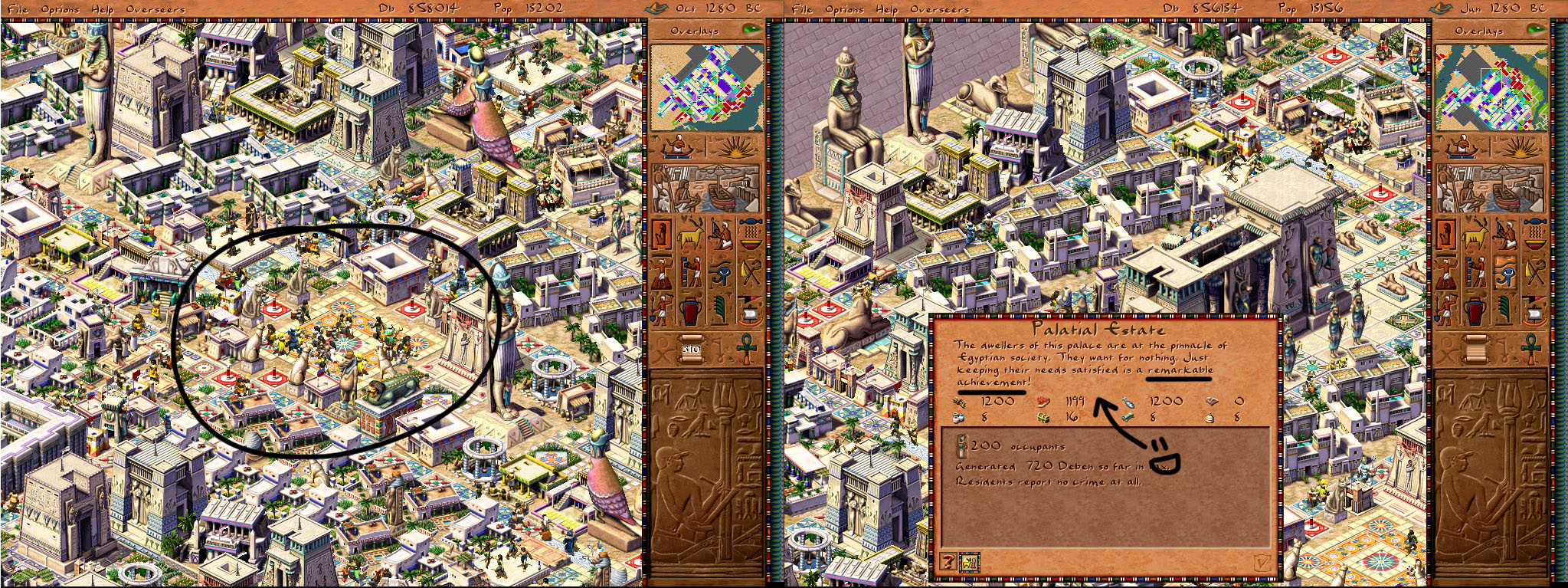
During my playthrough in Pharaoh, I reached the highest possible level of the population houses.  This was the first time I managed that since back in the days I never actually had the patience. For this reason, it was the first time I had a chance to see the highest demands of the population in work.

And here is where I got seriously confused for a while. And what confused me was the luxury goods’ boxes.

egypt boxes 2

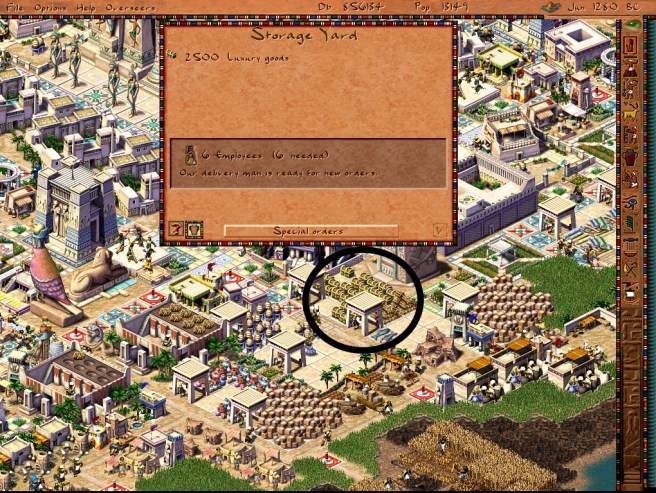
First a quick recap of the game mechanic: your houses need resources in order to grow. One of the last resources is called “luxury good”. You can build a jeweller and produce the resource which literally looks like a box to be later picked up by bazaar trader to be delivered to the residences.

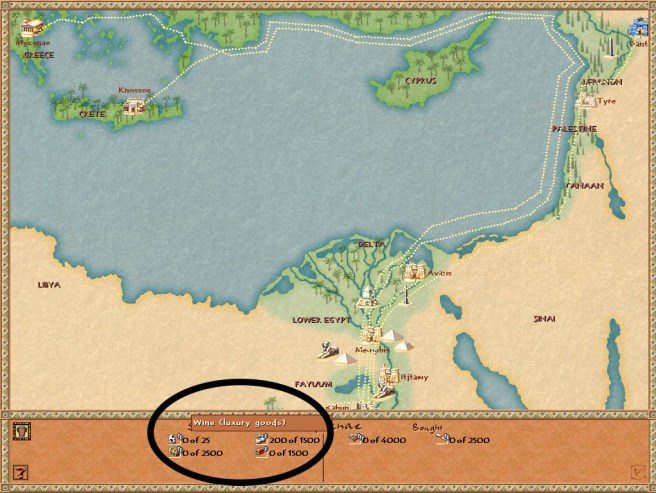
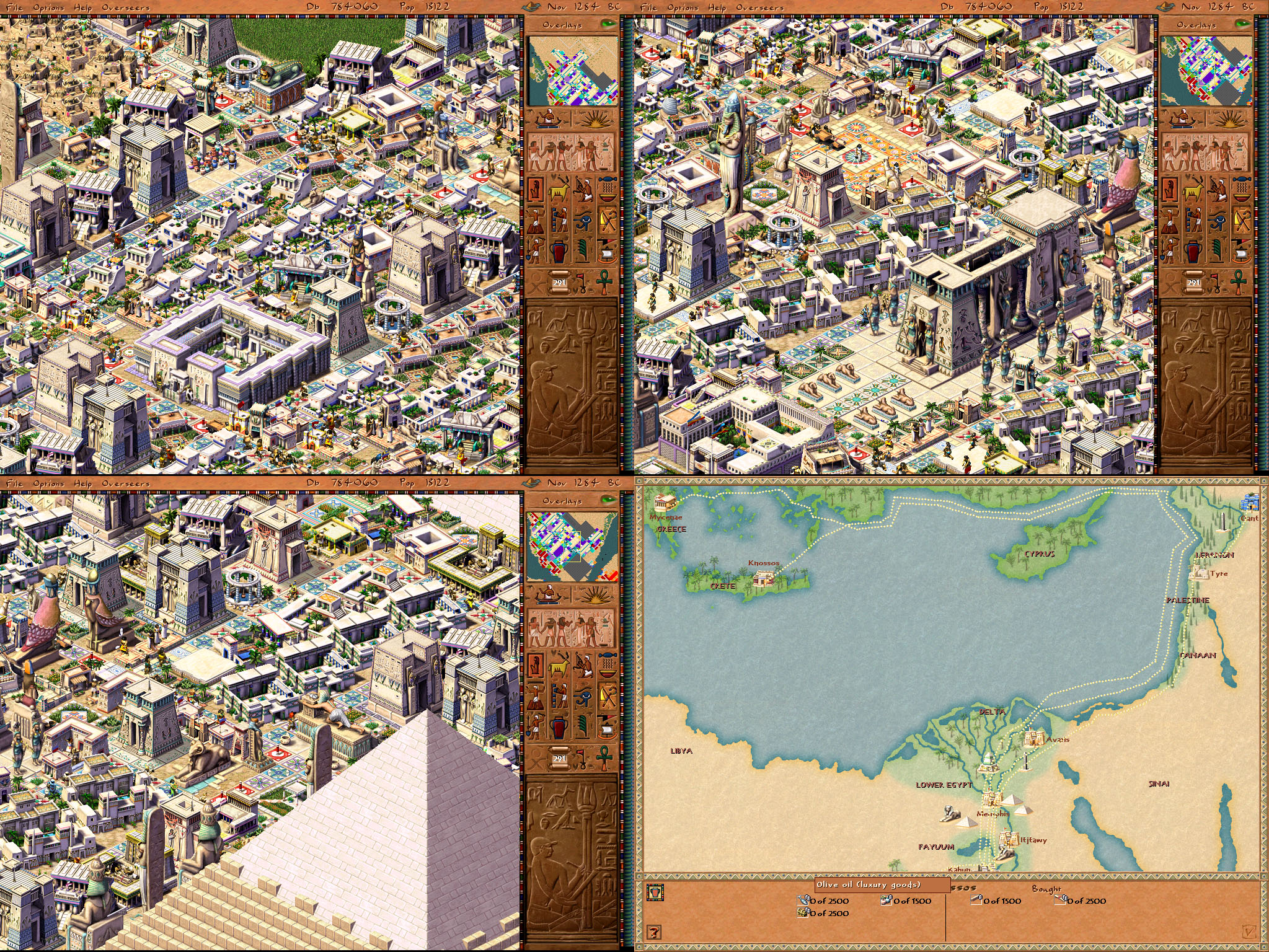
So, then the houses demand the second type of boxes. I quickly realise that there are more boxes and a look at the world map confirms my suspicion. Besides, I am already familiar with the concept of the need to import luxuries from Emperor. For a while, I am confused by the icons of the luxury goods don’t seem to differ, only to state their uniqueness in parenthesis. I think for a moment, then open the trading route and return to the city. And I see all my houses grow in that very moment.

egypt boxes

Now, mechanically this is all simple. Once the overseer system of the game informs the world that the trading is open, the city assumes that it has 2 types of the needed goods. And the houses then assume that the need is fulfilled since the city is confirming the existence of 2 goods. But the aesthetic of having one icon allows for the following assumption, which I find to be amusing enough to share with the world:


-So, you are telling me that a society that tallies everything (one of the biggest things during the Bronze Age) and the game that so far bothered with a pile of individual icons suddenly collectively decided “We are not gonna show the player what is inside the box! Ha ha ha”? Let’s see… the people know from the overseer that the city has two types of boxes. And one can argue, that people simply check what is inside the box before buying! However, I have been shown all the information visually so far, so I am forced to assume that once the box is closed, you don’t know what’s inside. I mean, I love the icon of the gems, they would look great in an open box, but no…

Then the boxes are the way for the rich people to gamble. The demand for luxuries and the demand for the possibility to open a box and find one out of 2 (or more) “goodies”. Aha, this is the ancient loot boxes. Buy something, which you don’t know what it is, but hopefully, it is good! DOn’t worry, it’s just cosmetics! That excuse might have worked in ancient Egypt…

Bird’s view of China and Egypt

Update: You can now click the images to inspect them for more details.

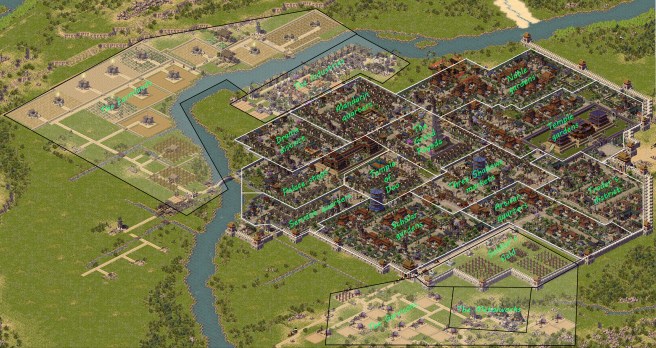
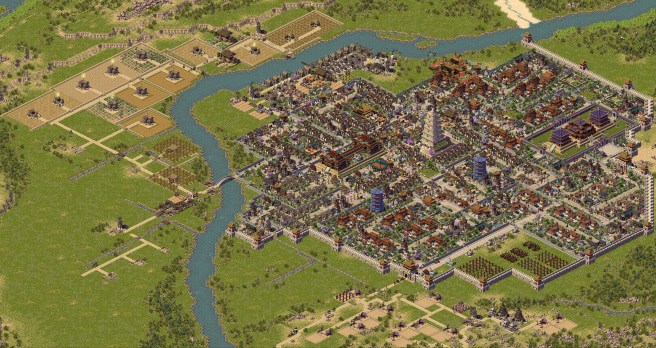
I got too invested in my Emperor city and decided to make a picture of the whole thing. It turned out great. And in theory, if you can figure out how to zoom in dramatically you should see the streets in details. Enjoy!

bird's view china

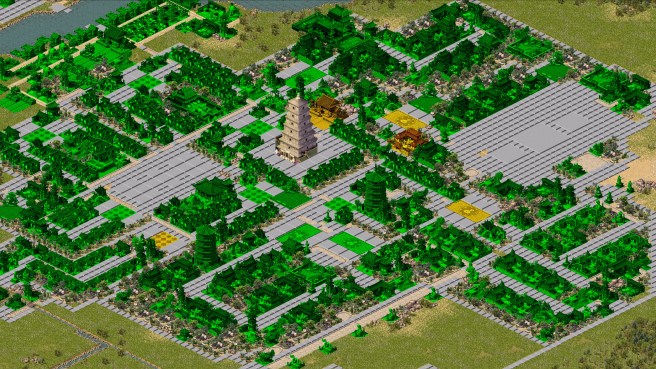
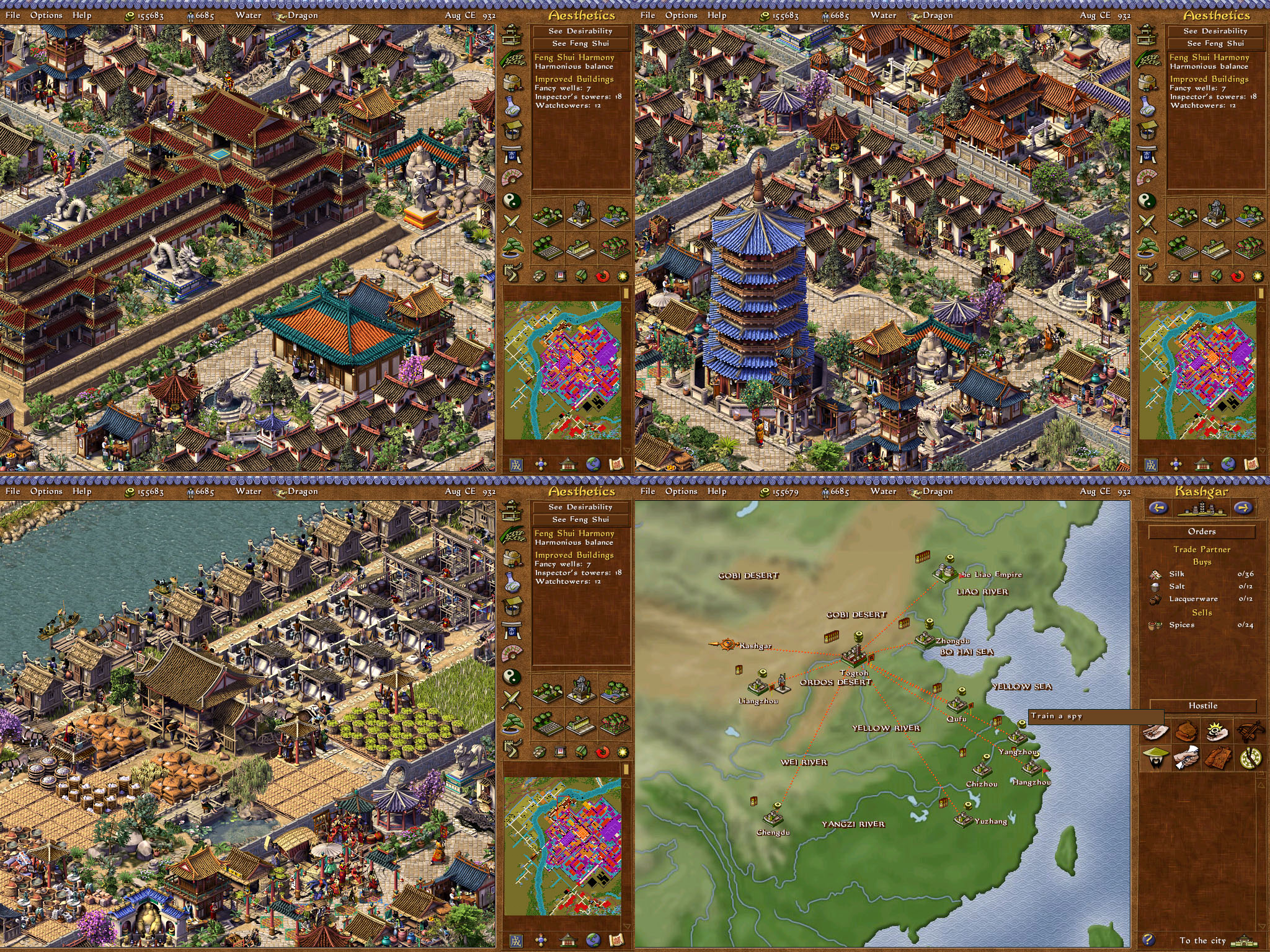
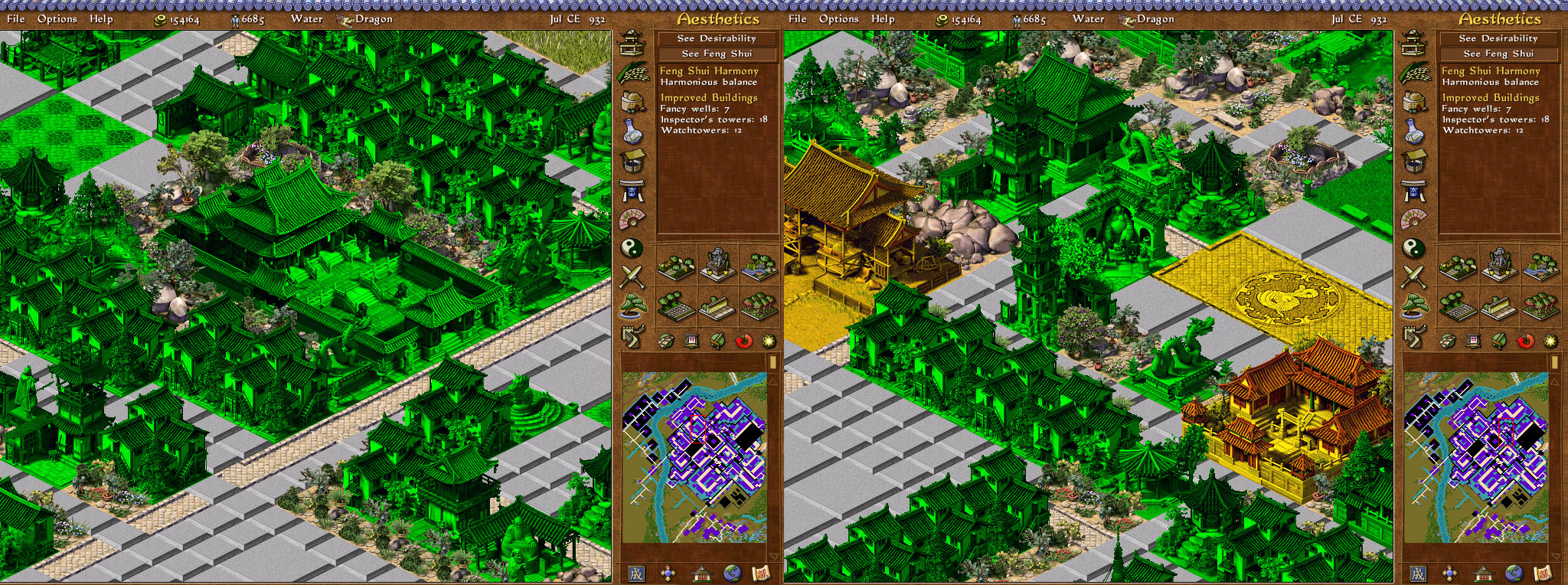
A humblebrag about the level of harmony in my city.

bird's view feng shui china

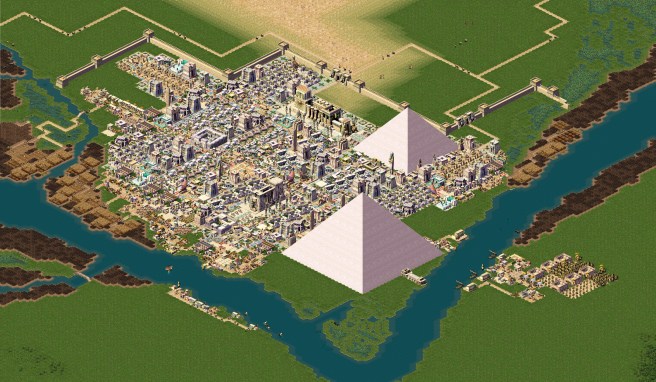
Also, Egypt!

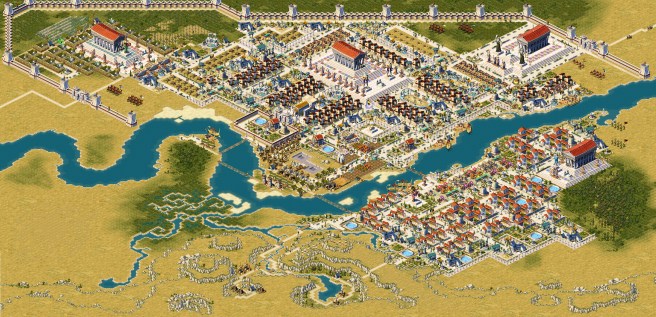
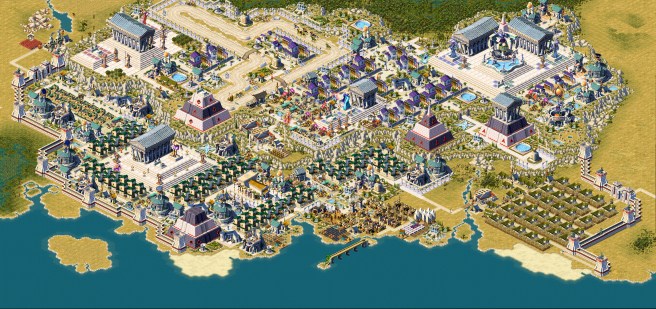
bird's view egypt

And in the short future – Greece!

City builders: Emperor

Note: To see the screenshots properly you have to enlarge the whole page. Free WordPress doesn’t allow enlarging images separately, unfortunately.

Emperor: Rise of the Middle Kingdom (2002) is the last game in the city building series made by Impressions Games and BreakAway Games (Apparently BreakAway Games were also involved in developing the addon Cleopatra: Queen of the Nile for the game Pharaoh), and published by Sierra Entertainment. Emperor lets us build cities in the setting of Ancient China.

china4

A fair criticism of this game would be to say that there is barely anything new in this game if you compare it to other games in the series, excluding aesthetics. If we are to consider the series as an accumulation of mechanics that keep getting reshuffled every game, then Emperor brings to the table exactly 2 new things. Okay, let’s be generous and say 2,5.

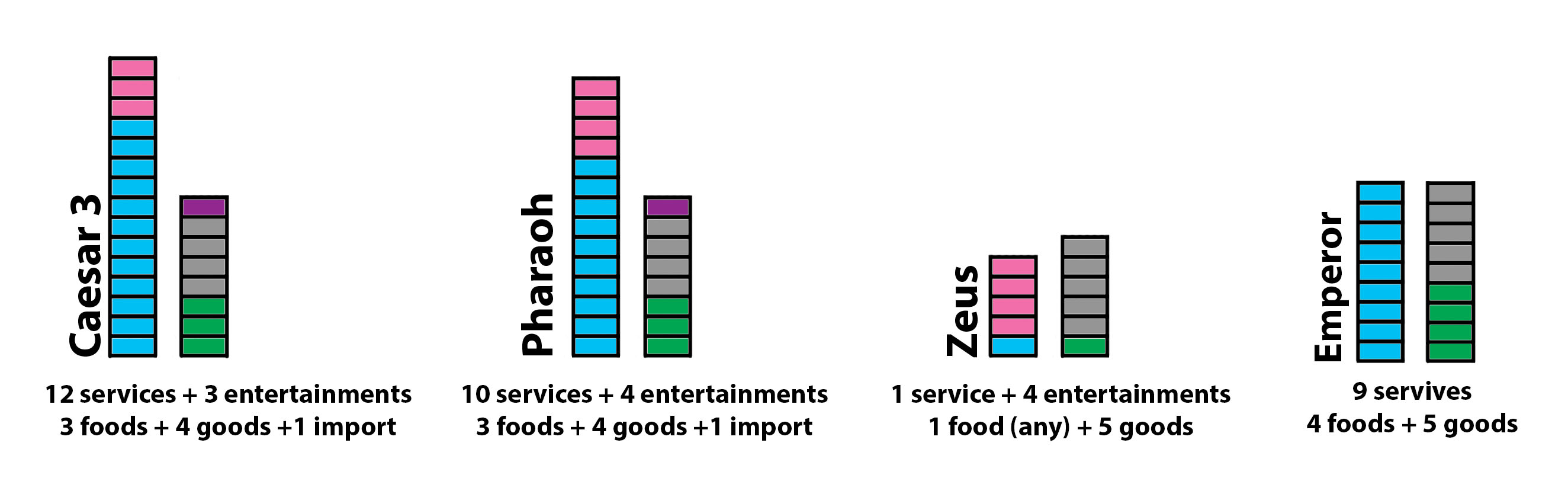
As the continuation of my previous post about Pharaoh let’s first examine the main core of the game: satisfying the needs of the population. And I’m happy to tell that Emperor might be the game where some sort of balance is found in the department of people’s needs.

stats_ all ancient civs

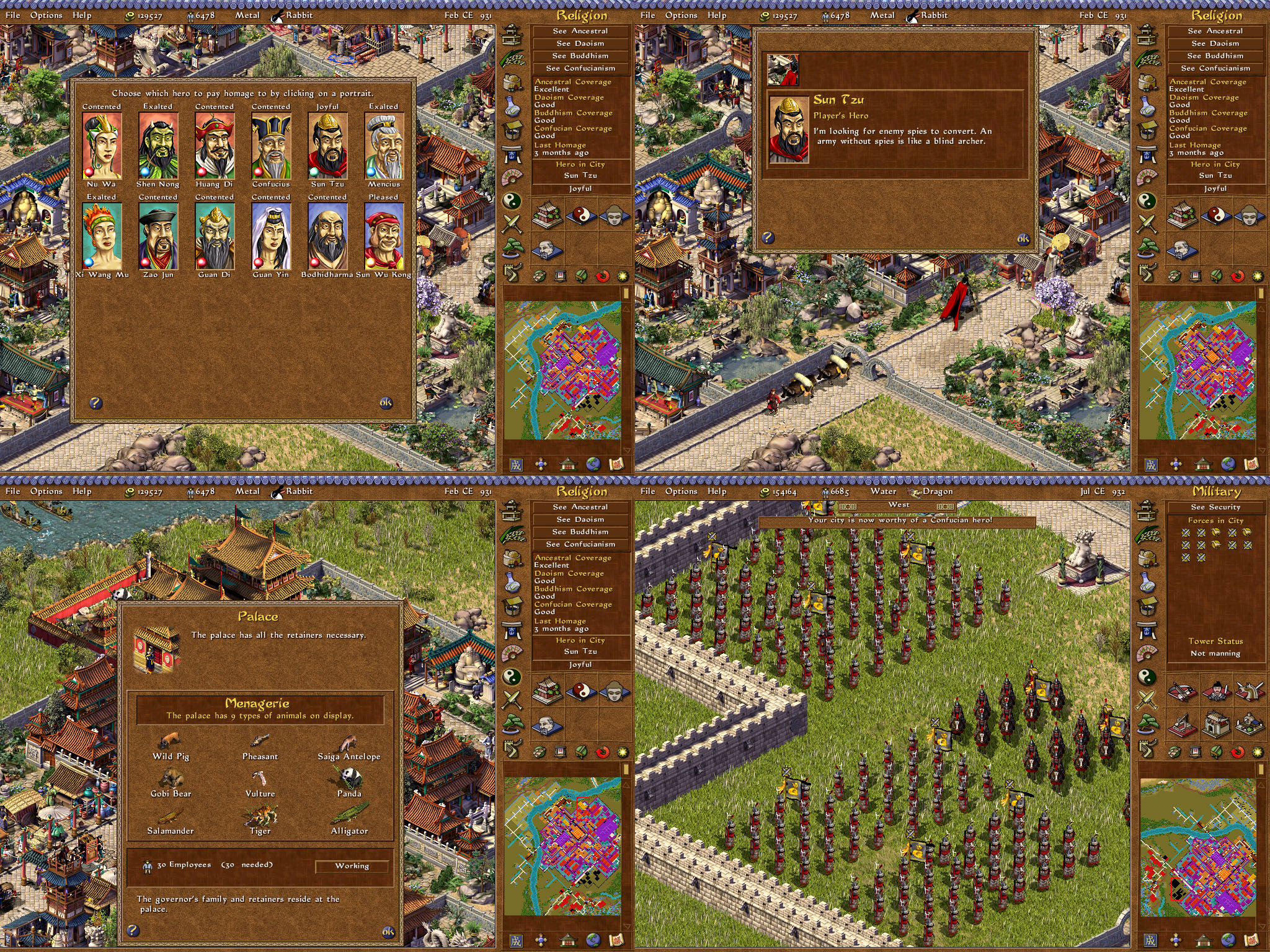
So, what’s new is in the game? Let’s start with the 0,5 “innovation”: interactive deities. That’s right folks! If ever you wanted to boss around a divine being – now is your chance. So what does that mean? It means that the gods we had in Zeus are back and now are intractable and can follow your command, rather than being random walkers. And this now makes exactly 2 entities that this game lets you control directly (the other one being your army units). The real impact of you being able to control gods is one: controlled blessings where before you had to hope that a god passes by a blessable building. Now you just tell them to go and bless the damned things. Get it? Blessing the damned, hurhurhur… Also, the gods can participate in the war, give certain economic bonuses, function as particular walkers and catch animals. Speaking of the animals, this is a new thing in the game, but it has no real impact on the game, so it’s the part of 0,5.

china1

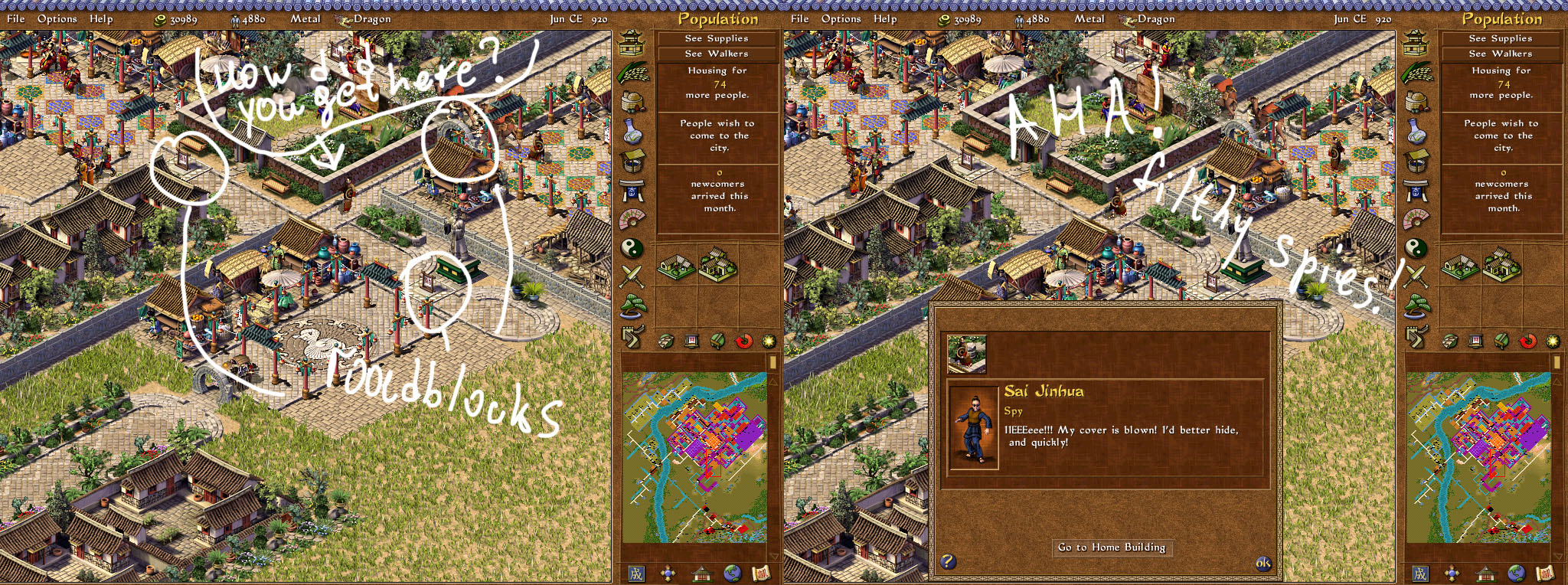
Another attempt at adding more interaction with the city are the spies. Spies are basically in the cities to attempt a sabotage. But the interesting thing about them is that you can prevent sabotage by actively inspecting the walkers in your city. I admit that there is something amusing and entertaining in spotting a walker that is walking where he/she clearly doesn’t belong. And while spies are extremely clumsy and easy to counter, they add more to the feeling of the city being alive.

china2

But the real diamond in all of these Asian curly rooftops is the feng shui system. No more copy-pasting the same district template everywhere! Where before the player just had to keep in mind that a district needs X squares for the services and then place the buildings anywhere, the player is now made to consider the placement of the intended buildings. The landscape (trees, stones and hill slopes, water etc.) now influences the placement of the buildings. Every building belongs to one of the 5 feng shui elements. To skip the details – placing too many building inconsiderably makes your city riot. This way I find myself much more invested into the architecture of the layout of the city than I was in the previous games.

china3

All in all, I find Emperor to be a nice conclusion to this series of games. Hope you enjoyed screenshots! And check out the bird’s view of my cities here.

Pharaoh/Cleopatra

Zeus

City builders: Pharaoh/Cleopatra

Note: To see the screenshots properly you have to enlarge the whole page. Free WordPress doesn’t allow enlarging images separately, unfortunateegypt1

Next stop on our journey through time is Pharaoh from 1999. In this game, you become the administrator of various cities in ancient Egypt. This is the 4th game in the series made by Impression Games and published by Sierra Entertainment. This game also has an expansion called Cleopatra: Queen of the Nile that brought in some interesting monument projects to the game.

Here is the main activity of the game:

Build houses to get the population -> employ the population to create the food, goods, and services -> the houses get bigger (thus increasing the population) and give more tax income as they get the access to the food, goods, and services

All of the games in the series are based on this loop. Hell, most of any builder games are based on this loop.

egypt2

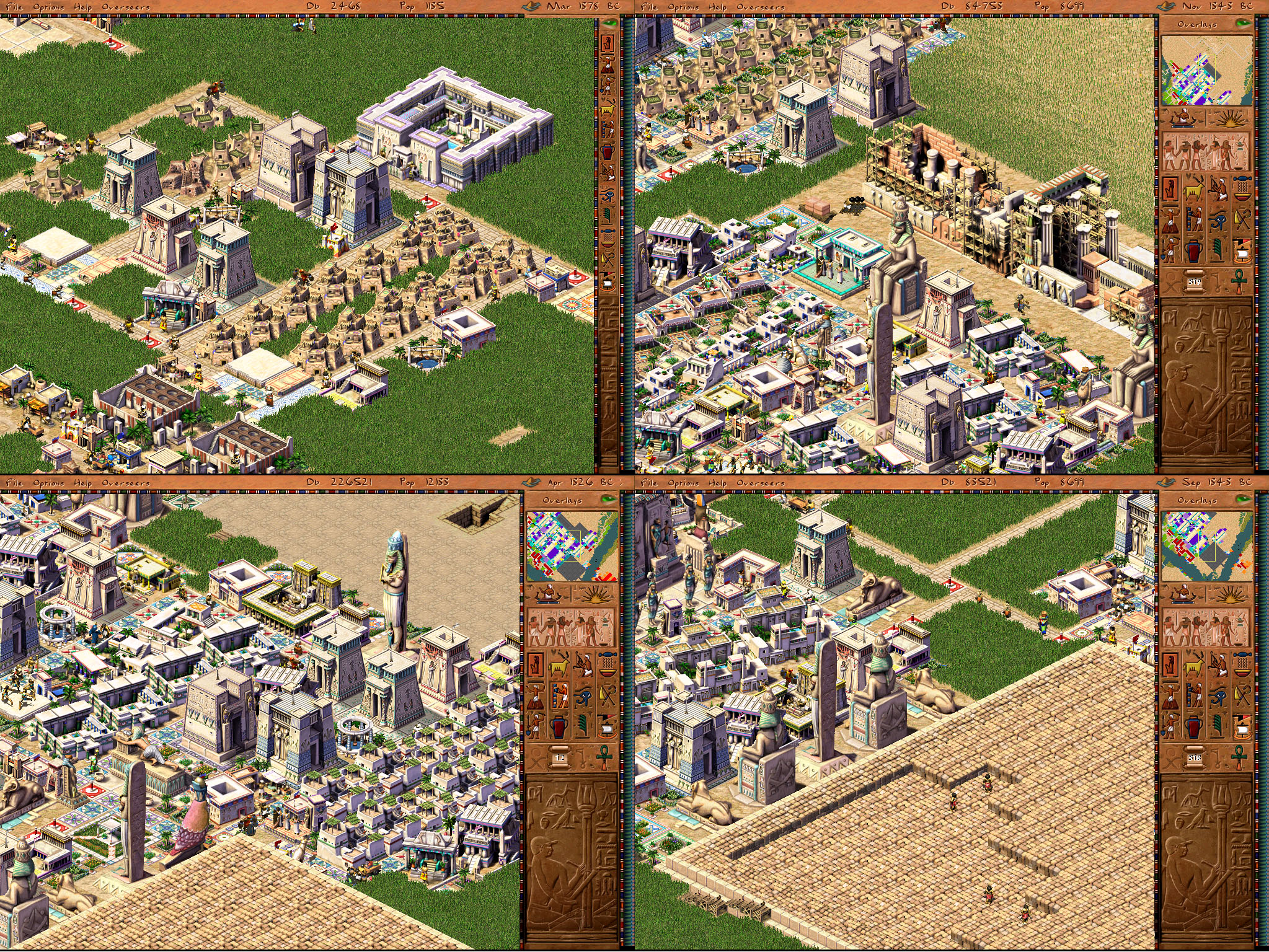
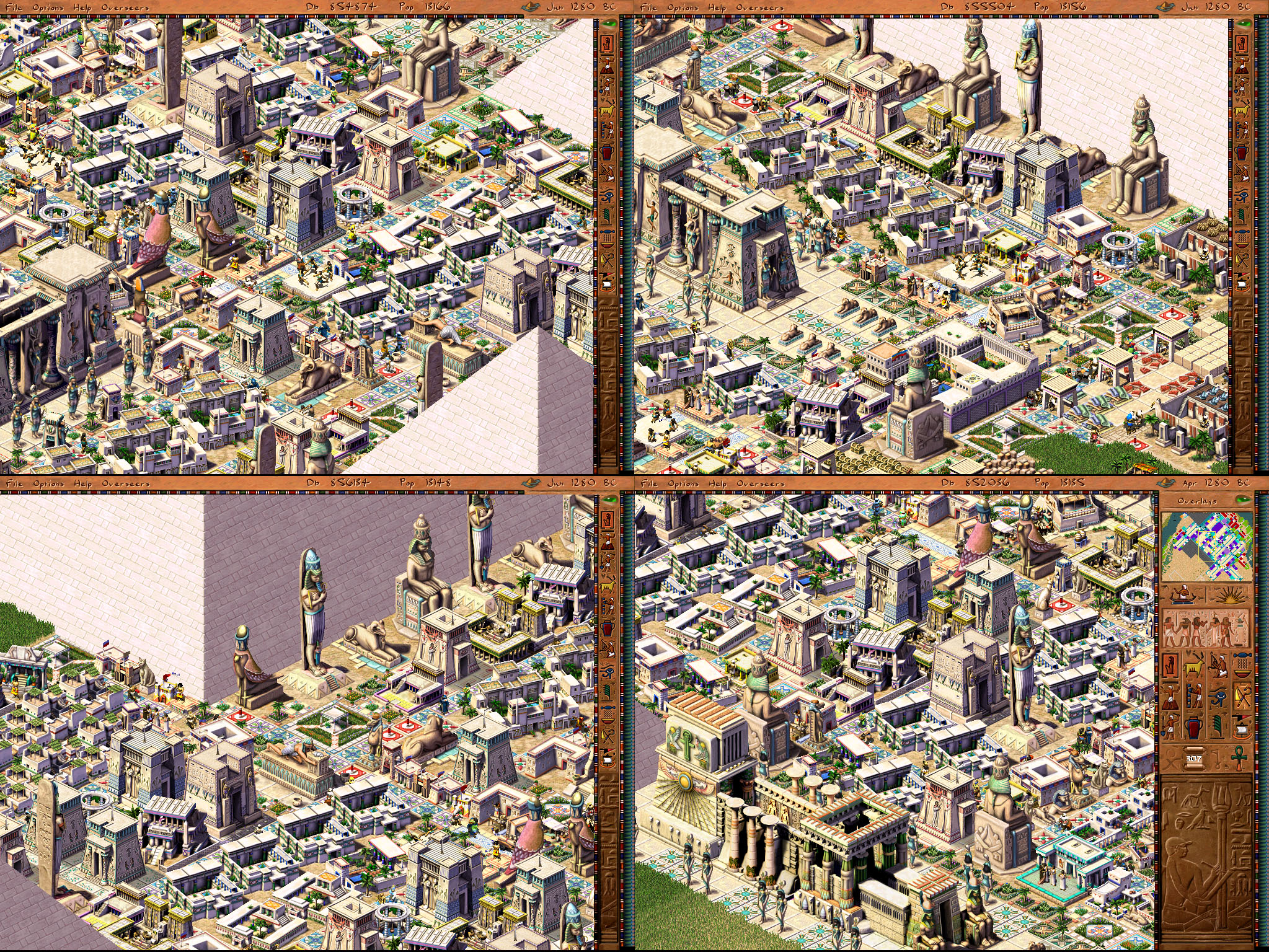
So what makes Pharaoh unique? The signature of this game, the way I see it, is the monument projects. These beasts take a tremendous time to create. The pyramids in my screenshots were built for so long that I finished shaping my city to the form I wanted and I STILL had to speed up the game and wait for around 30 more years for construction to be done. Actually, I started the medium pyramid in the middle of the playthrough and it got finished faster than the big pyramid… So, where is the fun? Surely not in watching this snail race? I find that the pleasure is hidden in building your city around these giants. That way, once the great projects are finished, you have a prosperous city at their feet for that perfect screenshot. Trust me, the satisfaction payoff is huge.

egypt3

Another thing that I enjoyed while playing Pharaoh, were the festivals dedicated to the gods. The Caesar didn’t have a visual feedback for these activities, as far as know, while later games after Pharaoh changed their approach to religion. There is a sense of accomplishment in watching the festival square flooded with entertainers, priests, and scribes when you know that your first festival only had a couple of priests and a juggler. It’s a great way to show the player the progress and the growth of their city, as every new temple, stage, school, and a noble house sends a person to the festival.

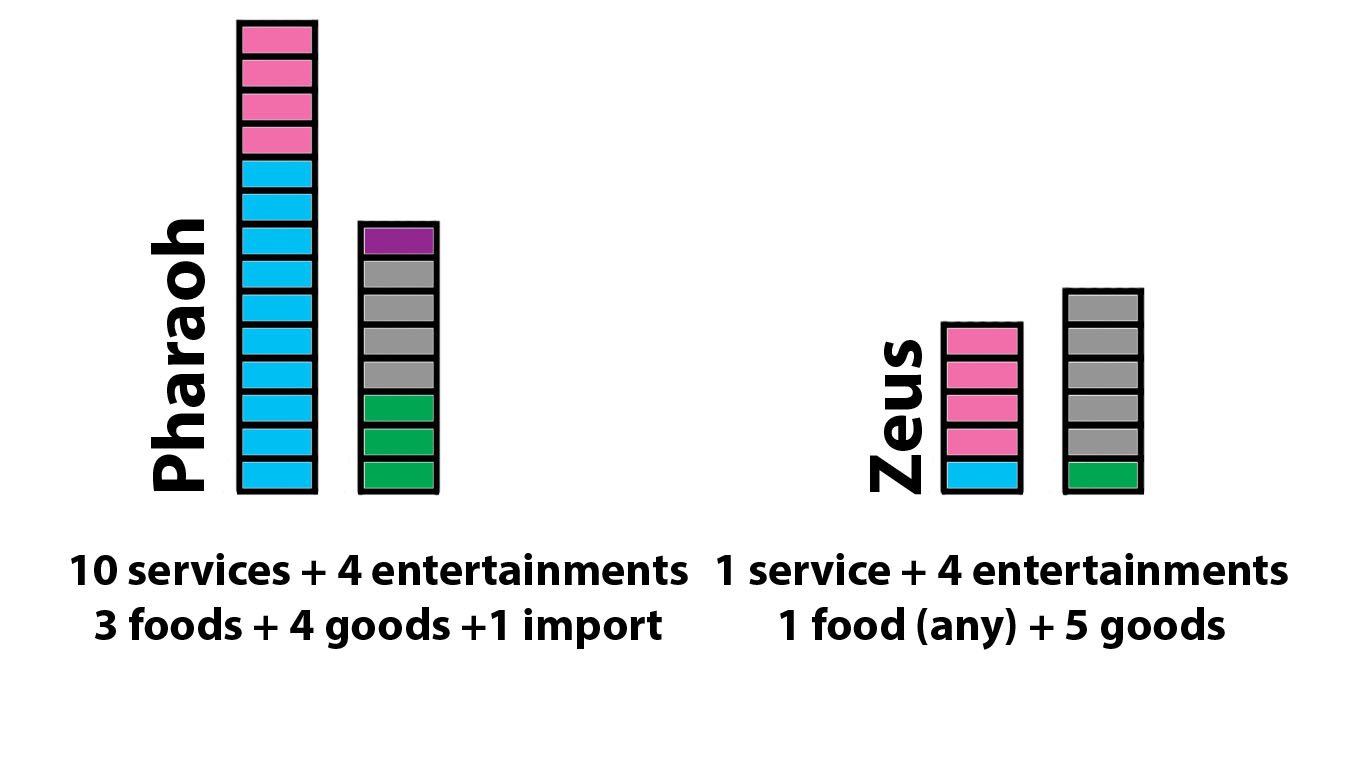
While I love Zeus for its aesthetics, the main reason I love Pharaoh is the mechanics. The mechanics that got kinda butchered in Zeus. The center of all these management games is to keep increasing the population while fulfilling their needs. And the complexity of this task is far more superior in the Egyptian edition then it is in the Greek edition. Here is a graph I made to show the amount of mechanics in two games:

stats_ Pharaos + zeus

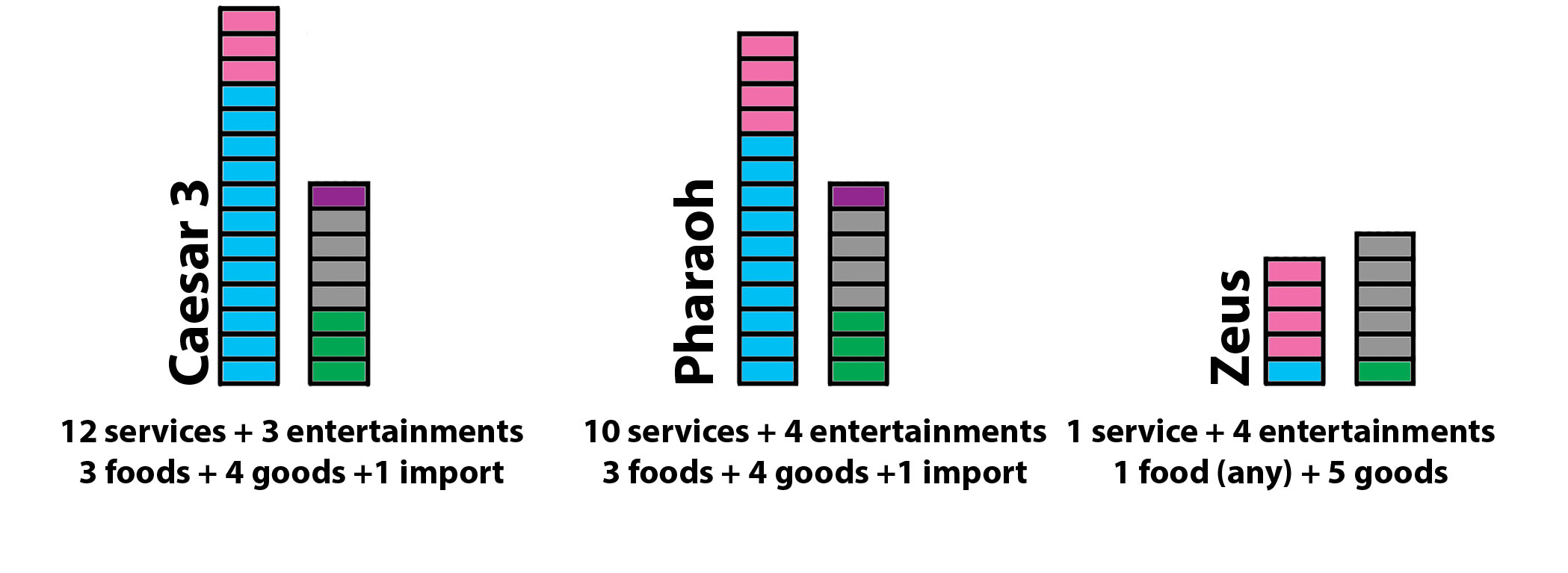
I guess no elaborate explanation needed. The number of features that were involved in the housing mechanics was dramatically cut. I wonder what happened there? While looking into this, I got curious to see as to how many requirements the houses in Ceasar have had. Imagine my shock when I saw this:

stats_ Caesar + Pharaos + zeus

Turns out that Caesar was even more complicated than Pharaoh, even if it was just by one service. And in Caesar, you can’t control the flow of your walkers because there are no roadblocks! It must have been a pain to achieve the highest house level.  Pharaoh considers a similar feat to be an achievement. Anyway, I’m not going back to Caesar, that’s for sure…

egypt4

Hope you enjoy screenshots!

Emperor

Zeus